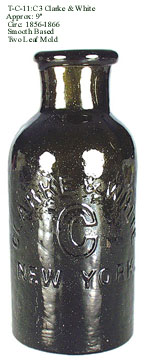
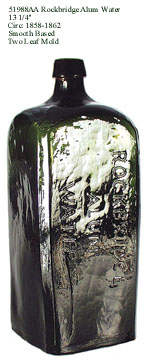
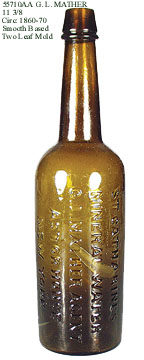
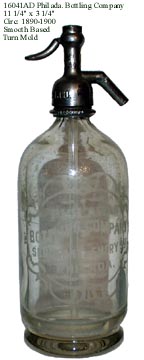
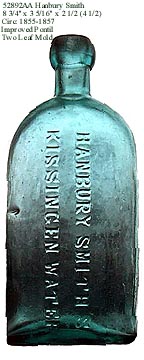
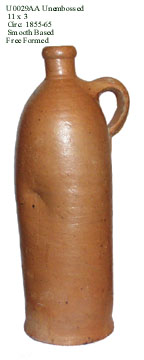
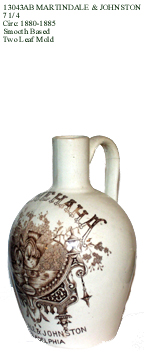
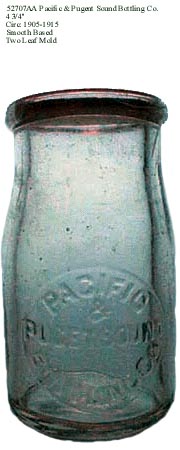
The shape of a bottle has a lot to say about a bottle's age and the
product that it held. Regional preferences and traditions help to
dictate what shapes were popular and for how long. Some forms are
noticeably rare or absent from some areas of the country while popular
in others. Unlike other bottles, those for carbonated beverages
evolved more frequently over the years. Many of the areas of North
America did not have a population to support local manufacture of
carbonated beverages and thus forms of that age are absent in those regions.
Special patents also dictated a bottle's shapes. Some patents were
more popular than others. The 1879 Hutchinson patent, from Chicago, was
used by over 4,000 different firms for their bottles, while the 1875
Arthur Christin patent, of the same city, was only used in a few dozen.
Bottles from different countries also vary greatly. Codd patent
bottles from the United States are uncommon, but are the norm in Bermuda
and other English Colonies. Hutchinson patent bottles are directly
the opposite, with over 14,000 example from North America and few others
in the rest of the world. There are only three
figural bottle in the form of Moses, a barrel and a canteen.
 |
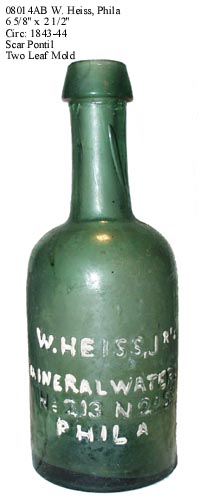
Early pontil shape, circ: 1838-1845
Typical size: 6 1/2 x 2 7/16"
Also in pint size but not sided
Used to bottle artificial soda and mineral waters.
Glass only. Occurs on
43 bottles.
|
 |
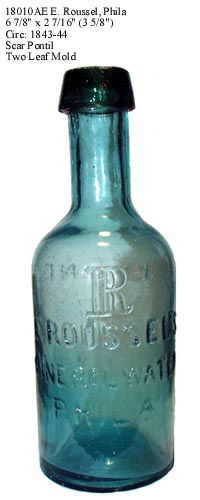
Late pontil shape, circ: 1844-1846
Typical size: 6 7/8 x 2 1/2"
Not known in quart size or sided
Used to bottle artificial soda and mineral waters.
Glass & Pottery. Occurs on
20 bottles. |
 |
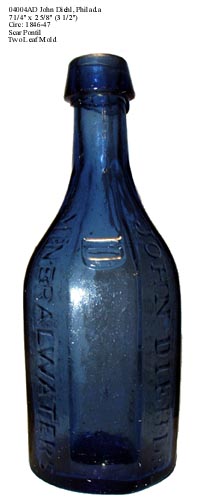
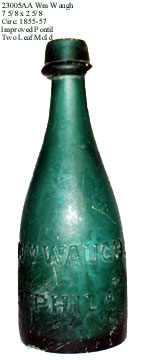
Soda shape, circ: 1845-1865
Typical size: 7 1/4 x 2 9/16"
Not known in quart size but come sided
Used to bottle artificial soda and mineral waters.
Glass only. Occurs on over 1,000 bottles. |
 |
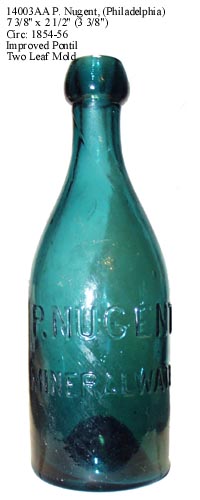
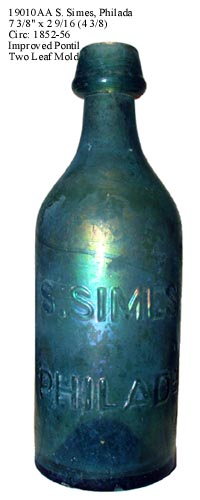
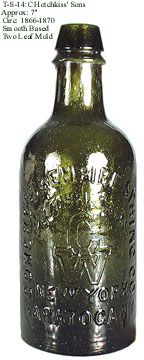
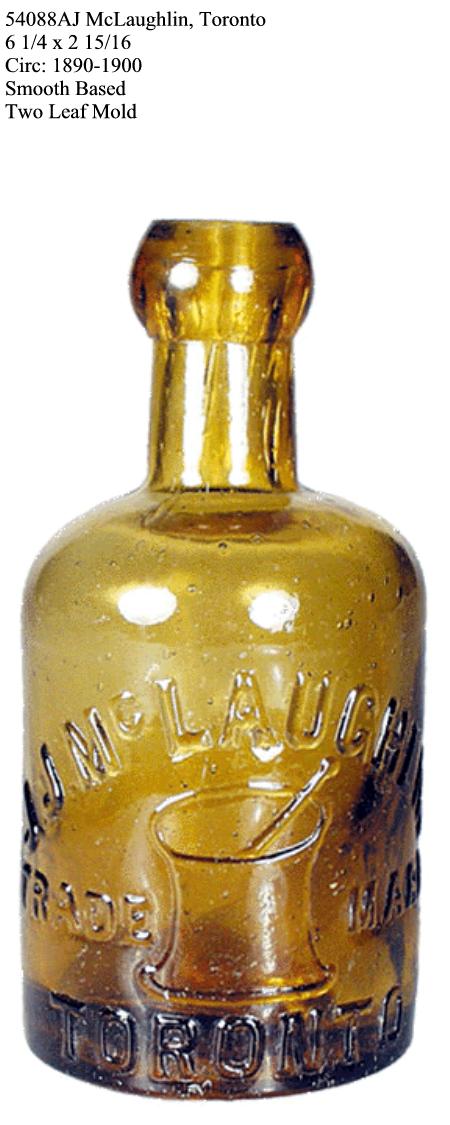
Pony shape, circ: 1852-1905
Typical size: 7 x 2 1/2"
Not known in quart size but come sided
Used mostly to bottle artificial soda and mineral waters and
in some applications beers of various sorts.
Glass only. Occurs on over 3,000 bottles. |
 |
Drug store shape, circ: 1855-1865
Typical size: 7 1/2 x 2 3/4"
Not known in quart size or sided
Used mostly by pharmacists to bottle artificial soda and
mineral waters. Was for a more upscale trade.
Glass only. Occurs on
42 bottles. |
 |
Ten Pin shape, circ: 1844-1910
Typical size: 7 x 2" or 8 x 2"
Also in quart size and sided bottles
Used to bottle artificial soda and mineral waters. The
degree curving on the sides varies greatly.
Glass & Pottery.
Occurs on 106 bottles. |
 |
Teepee shape, circ: 1847-1905
Typical size: 7 1/2 x 2 3/4"
Known sided but not in quart size
Used mostly to bottle artificial soda and
mineral waters. Was also used to bottle beer.
Glass only. Occurs on
2 bottles. |
 |
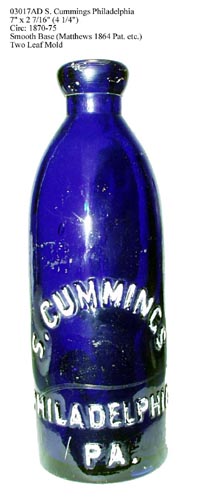
Gravitating shape, circ: 1865-1885
Typical size: 7 1/4 x 2 3/8"
Not known in quart size or sided
Used to bottle artificial soda and mineral waters using the
Mathew's patent of 1864. Shape was also used for
Hutchinson's patent of 1879.
Glass only. Occurs on
334 bottles. |
 |
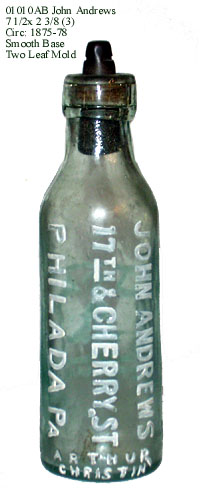
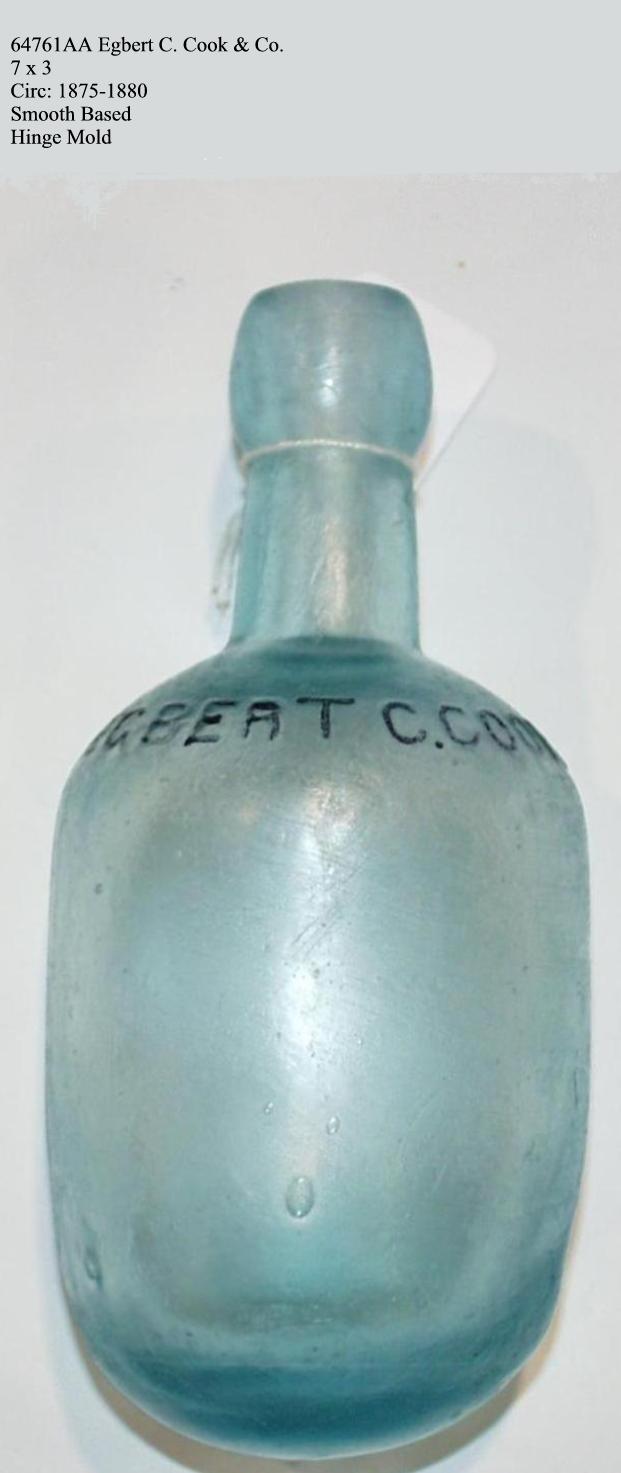
Arthur Christin shape, circ 1875-1880
Typical size: 7 1/2 x 2 3/8"
Not known in quart size or sided
Used to bottle artificial soda and mineral waters.
Glass only. Occurs on
22 bottles. |
 |
Hutchinson shape, circ: 1880-1915
Typical size: 6 1/2 to 7 1/2 x 2 3/8"
Also in pint and quart sizes and sided
Used to bottle artificial soda and mineral waters using the
Hutchinson or similar patents.
Glass only. Occurs on over 12,000 bottles. |
 |
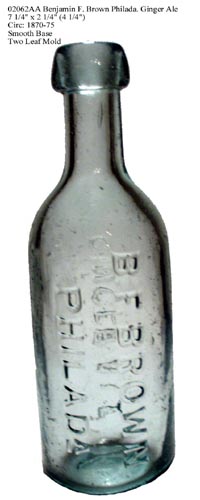
Ginger Ale shape, circ: 1870-1895
Typical size: 7 1/2 x 2 5/8 or 8 1/2 x 2 3/8"
Not known in quart size or sided
Used to bottle ginger ale.
Glass only.
Occurs on 411 bottles. |
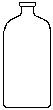 |
Cylinder shape, circ:
1855-1920
Typical size: 7 1/2 x 2 5/8 or 8 1/2 x 2 3/8"
Sizes range from 7 to 24 inches. Not known sided. Use continues
to modern day.
Used to bottle mineral or natural spring waters and bottlers
supplies.
Glass only.
Occurs on 209 bottles. |
 |
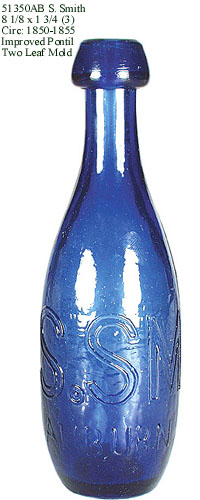
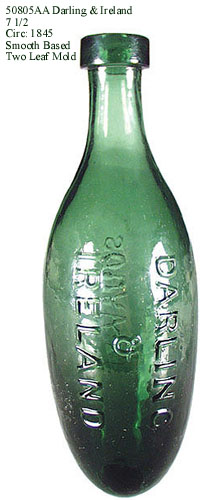
Torpedo shape, circ: 1800-1900
Typical size: 8 3/4 x 2 5/8"
Not known in quart sizes or sided
Used to bottle artificial soda and mineral waters.
Glass only. Occurs on
110 bottles. |
 |
Round bottom shape, circ: 1875-1920
Typical size: 9 x 2 3/8"
Known in quart size and come sided
Used to bottle artificial soda and mineral water.
Glass only.
Occurs on 147 bottles. |
 |
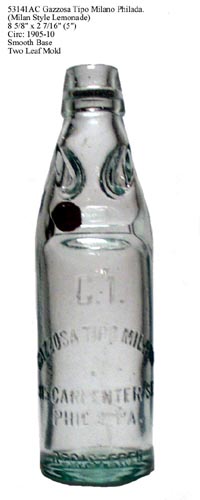
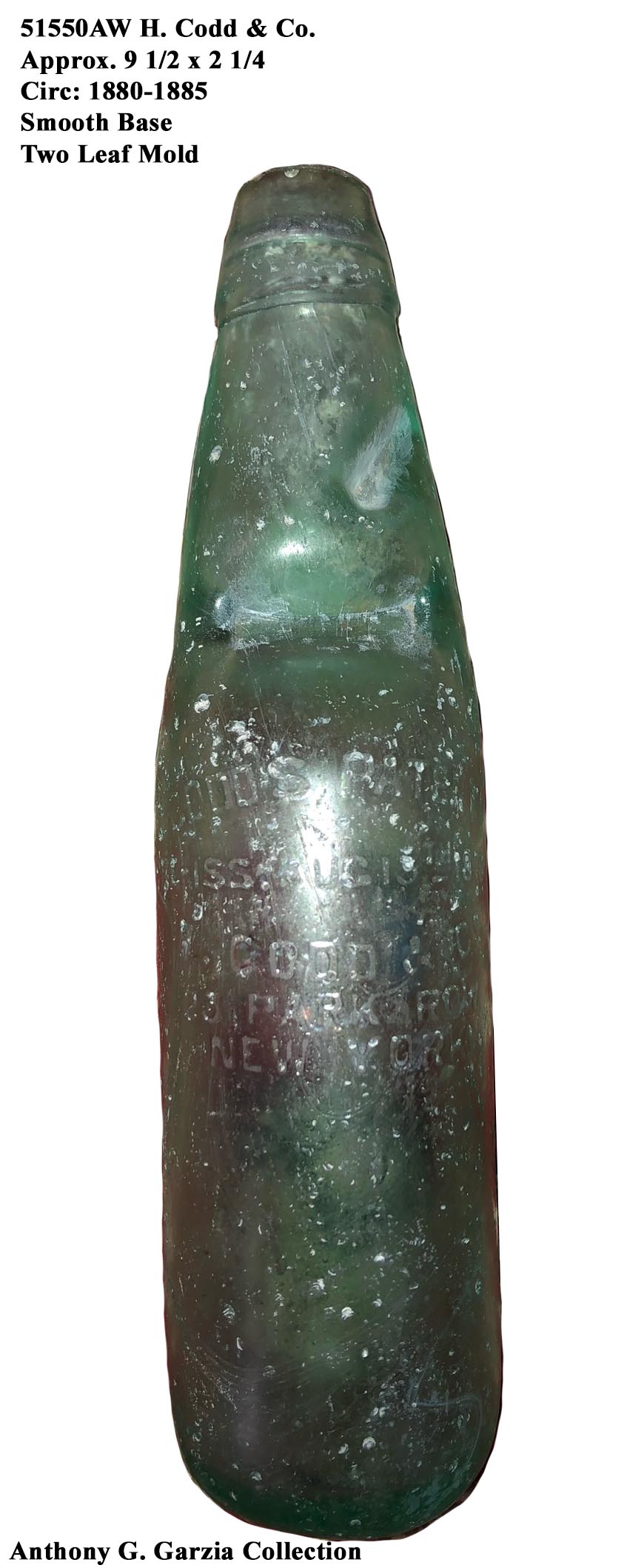
Codd shape, circ: 1873-1925
Typical size: 8 1/4 x 2 1/2"
Known in quart sizes but not sided
Used to bottle artificial soda and mineral waters under
Codd's patent. More common in other countries than in North
America.
Glass only.
Occurs on 206 bottles. |
 |
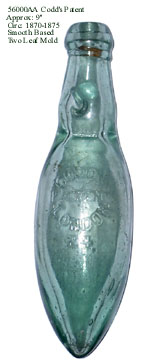
Hybrid Codd shape, circ: 1873-1895
Typical size: 9 3/4 x 2 1/2"
Not known in quart sizes or sided
Used to bottle artificial soda and mineral waters under
Codd's patent. More common in other countries than in North
America.
Glass only. Occurs on
9 bottles. |
 |
Round Bottom Codd shape, circ: 1880-1890
Typical size: 8 3/4 x 2 1/2"
Not known in quart sizes or sided
Used to bottle artificial soda and mineral waters under
Codd's patent. More common in other countries than in North America.
Glass only.
Occurs on 2 bottles. |

|
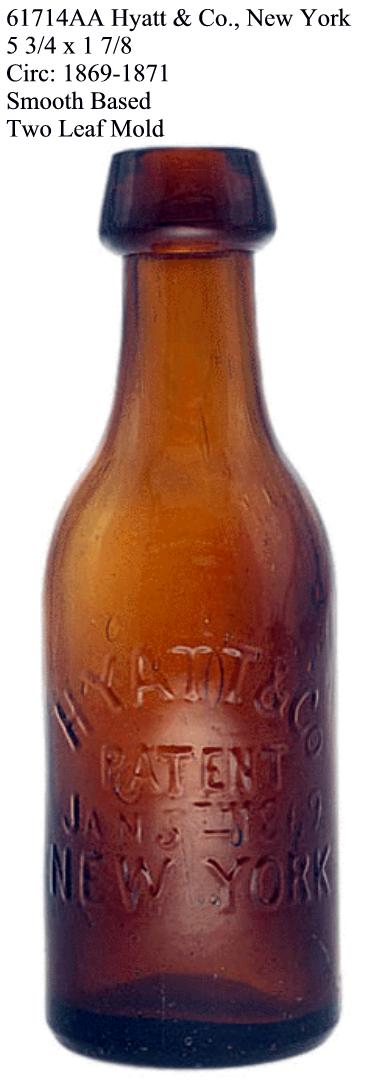
Cream Soda shape, circ:
1860-1880
Typical size: 5 3/4 x 2"
Only known in small sizes
and not sided.
Used to bottle cream soda or similar products
Glass only. Occurs on
48 bottles.
|
 |
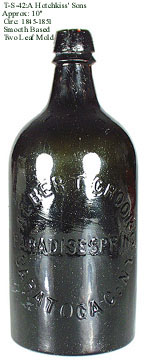
Saratoga quart shape, circ: 1823-1885
Typical size: 9 1/2 x 3 3/4"
Not known in pint sizes or sided
Used to bottle natural mineral waters.
Glass only.
Occurs on 170 bottles. |
 |
Saratoga high shoulder quart shape, circ: 1835-1875
Typical size: 9 1/2 x 3 3/4"
Not known in pint sizes or sided
Used to bottle natural mineral waters.
Glass only. Occurs on
19 bottles. |
 |
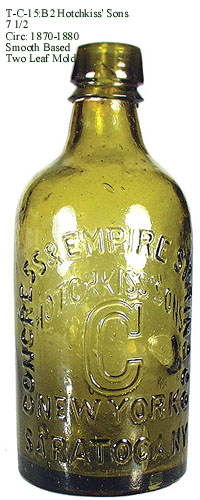
Saratoga pint shape, circ: 1823-1885
Typical size: 7 3/4 x 3"
Not known in quart sizes or sided
Used to bottle natural mineral waters.
Glass only.
Occurs on 173 bottles. |
 |
Saratoga half pint shape, circ: 1836-1880
Typical size: 7 x 2 3/4"
Not known in quart sizes or sided
Used to bottle natural mineral waters.
Glass only. Occurs on
22 bottles. |

|
Saratoga magnum shape, circ: 1835-1845
Typical size: 11 x 3 3/4"
Not known in pint sizes or sided
Used to bottle natural mineral waters.
Glass only. Occurs on 2 bottles. |

|
Saratoga salt jar shape, circ: 1855-1875
Typical size: 8 x 3 3/4"
Also in pint sizes but not sided
Used to bottle salts from natural mineral waters.
Glass only. Occurs on
16 bottles. |

|
Case shape, circ: 1855-1910
Typical size: 11 x 3 1/2 x 3 1/2"
Not known in pint sizes
Used to bottle natural mineral waters.
Glass only. Occurs on
13 bottles. |

|
Fifth shape, circ: 1860-1870
Typical size: 11 x 3"
Not known in pint sizes or sided
Rarely Used to bottle natural mineral waters.
Glass only. Occurs on
2 bottle. |

|
Siphon shape, circ: 1855-1920
Typical size: 11 x 4"
Known in pint sizes and sided
Used to bottle artificial mineral waters. Come with
and without footed base.
Glass only.
Occurs on 203 bottles. |

|
Medicine shape, circ: 1855-1920
Typical size: 8 x 3 1/4 x 2 1/2"
Not known in pint sizes or sided
Used to bottle artificial mineral waters.
Glass only. Occurs on
6 bottles. |
|
Seltzer shape, circ: 1750-1920
Typical size: 11 1/4 x 3 1/2"
Known in pint sizes but not sided
Used to bottle natural mineral waters, beer and gin.
Usually of Germanic in origin and reused in America.
Pottery only. Occurs on
3 bottles. |

|
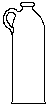
Jug shape, circ: 1800-1920
Typical size: 12 x 8"
Known in pint and larger sizes but not sided may be ovoid
or very angular in shape
Used to bottle natural mineral waters and bottlers supplies
such as syrups.
Pottery only.
Occurs on 75 bottles. |

|
Oyster cocktail shape, circ: 1905-1920
Typical size: 4 3/4 x 1 1/2"
Not known in pint sizes or sided
Used to bottle an oyster cocktail.
Glass only. Occurs on
12 bottles. |

|
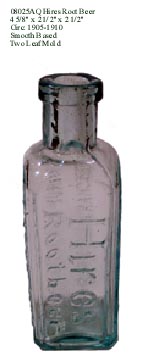
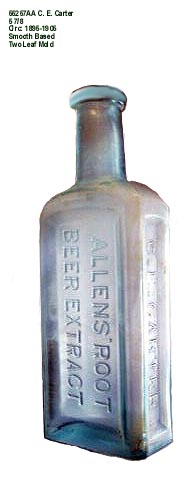
Root beer extract shape, circ: 1880-1920
Typical size: 4 3/4 x 1 1/2 x 1 1/2"
Not known in pint sizes
Used to bottle concentrated extracts for use in preparing
carbonated beverages at home.
Glass only. Occurs on
46 bottles. |
|
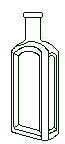
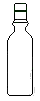
Medicine shape, circ: 1880-1905
Typical size: 5 1/4 x 2 x 1"
Not known in pint sizes
Rarely used to bottle concentrated extracts for use in preparing
carbonated beverages at home.
Glass only. Occurs on
5 bottles. |
|
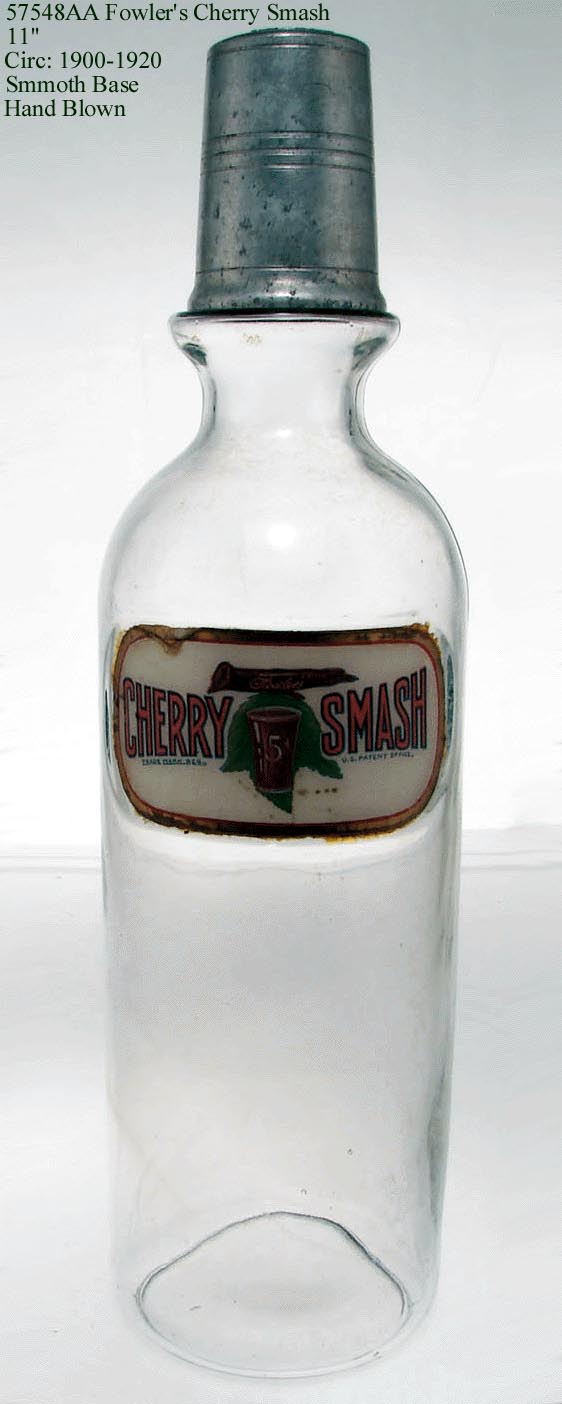
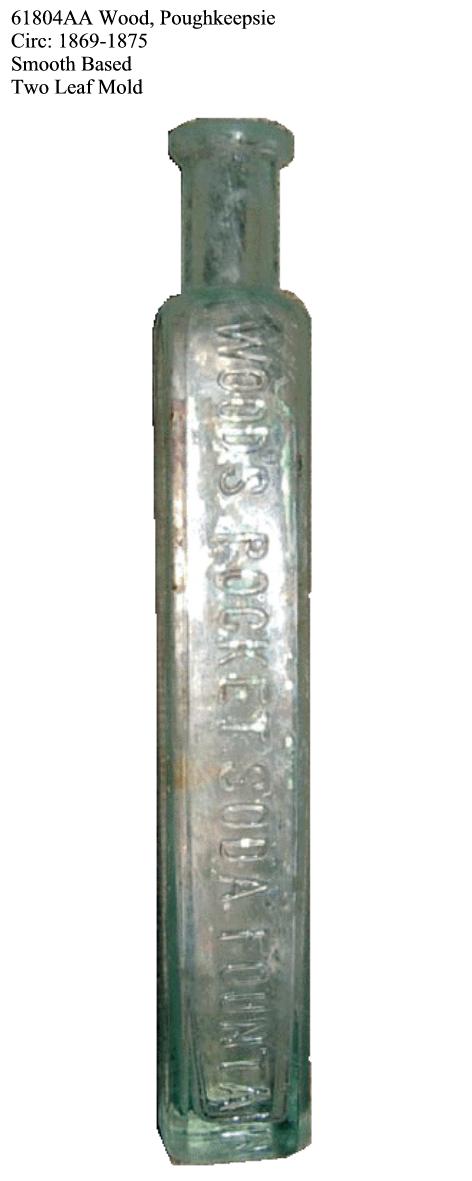
Syrup Dispenser shape, circ: 1880-1940
Typical size: 11 x 3
Not known in pint sizes
Used to bottle concentrated syrups that were diluted with carbonated
water at soda fountains for serving carbonated beverages.
Glass only. Occurs on
29 bottles.
|

|
Citrate shape, circ: 1900-1920
Typical size: 7 x 2 3/4"
Not known in quart sizes or sided.
Rarely used to bottle specialty waters.
Glass only. Occurs on
1 bottle. |
|
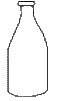
Standard Milk shape, circ:
1900-1940
Typical size: 9 1/2 x 3 3/4"
Only known in quart sizes.
Rarely used to bottle mineral or table waters.
Glass only. Occurs on
3 bottles.
|

|
Seltzer Water shape, circ: 1870-1915
Typical size: 6 x 2 7/8"
Known in half pint, pint and quart sizes, but not sided.
An English style shape used to bottler seltzer water.
Called a Dumpy Seltzer.
Glass only. Occurs on
12 bottles.
|

|
Round Bottom Seltzer shape, circ: 1870-1890
Typical size: 7 x 2 7/8"
Known in half pint size, but not sided.
An English style shape used to bottler seltzer water.
Glass only. Occurs on
1 bottle.
|
|
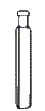
Vial shape, circ: 1865-1875
Typical size: 6 x 3/4 x 3/4"
Only known in standard sizes and sided.
Used to package crystals used to make soda water at home.
Glass only. Occurs on
1 bottle.
|
 |
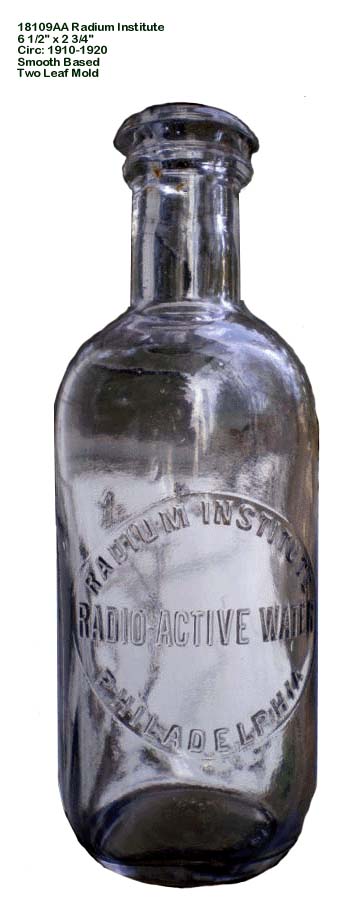
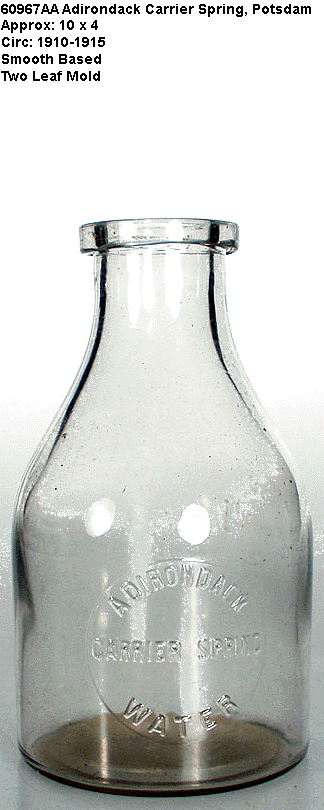
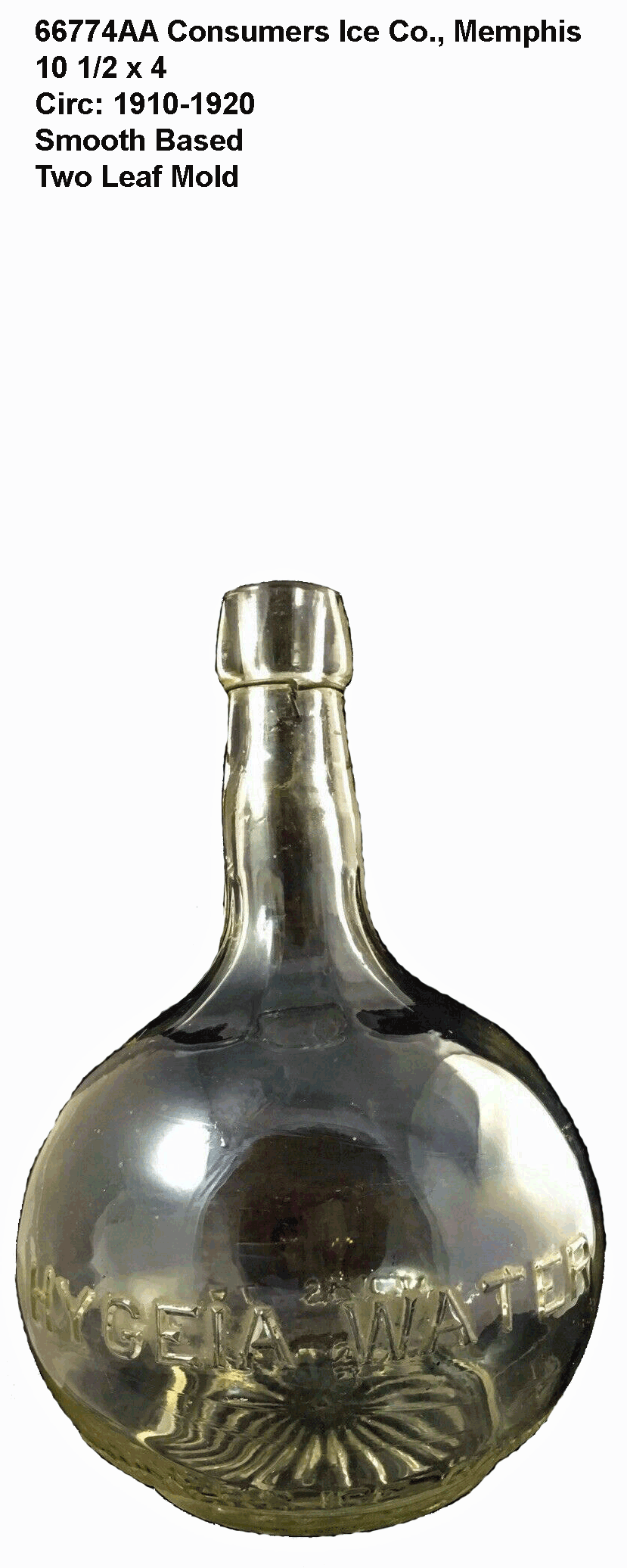
Globe shape, circ:
1910-1920
Typical size: 10 x 4"
Usually a quart size and not sided.
Used to decant mineral waters or similar products and soda
fountain syrups.
Glass only. Occurs on 8 bottles.
|
Click on the bottle drawing to see a picture.